
What are Ledgers?
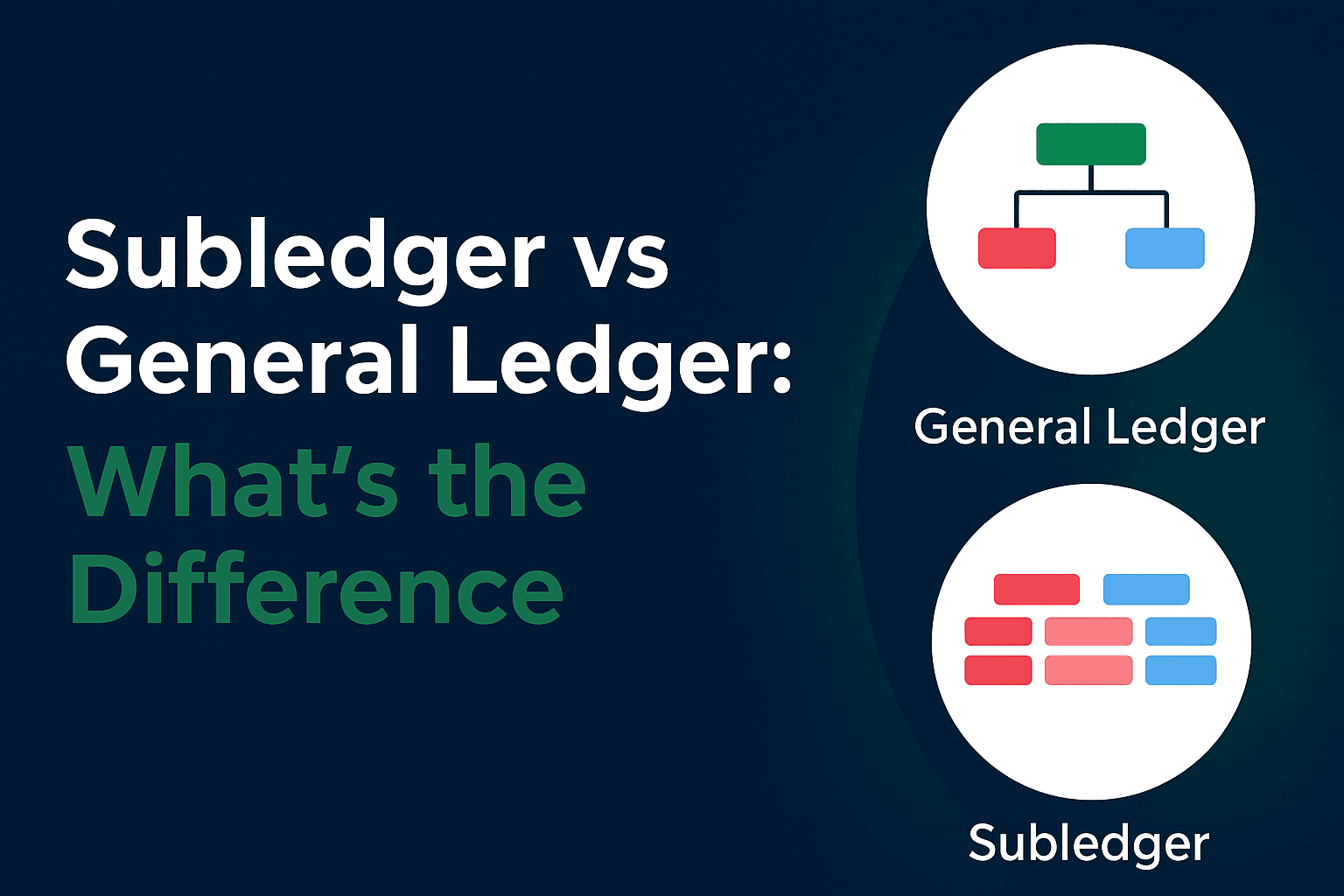
Ledgers are used to record a company’s financial transactions following standard accounting rules. The General Ledger is the main record that shows the overall financial picture of the business. However, recording every single transaction directly in it would make it too large and complex. That’s why companies use Subledgers — smaller ledgers that hold detailed information for specific areas like sales, purchases, or fixed assets.
What is a General Ledger?
A General Ledger (GL) is the main record of all a company’s financial transactions. It includes every Debit & Credit Entry made during a specific period across different accounts, such as Assets, Income, Expenses, etc.
The general ledger also gathers information from various Subledgers like accounts receivable, accounts payable, and inventory providing a complete view of the company’s financial activities. Because it brings together all these details, the General Ledger is often called the “Set of Master Accounts.” It serves as the central source for preparing Financial Statements & Tracking the overall financial health of a business.
What is a Subledger?
A Subledger, also known as a Subsidiary Ledger, is a detailed record that contains transaction level information for a specific type of account. It acts as a subset of the general ledger, helping to organize and manage financial data more efficiently.
Instead of recording every single transaction directly in the general ledger, companies use subledgers to capture detailed activities—such as sales, purchases, accounts payable, accounts receivable, and production costs. The total of these detailed transactions is then summarized and posted to the general ledger.
This ensures that the general ledger remains clear and concise, while subledgers hold the detailed breakdown. The combined totals of all relevant subledgers must always match the balances shown in the general ledger, maintaining accuracy across the company’s financial records.
Connectivity b/w SL & GL
The connection between Subledgers (SL) and the General Ledger (GL) in Business Central happens through Posting Groups and Posting Setup.
Posting Groups
These act as the bridge that determines which GL account will be used when a transaction is recorded.
- Customer Posting Group – Links Customer Entry to A/R GL Account.
- Vendor Posting Group – Links Vendor Entry to A/P GL Account.
- Inventory Posting Group – Links Item Entry to Inventory GL account.
- Bank Account Posting Group – Links Bank Entry to related GL accounts.
Posting Setup
These define combinations for Automatic GL posting:
- General Posting Setup
- Inventory Posting Setup
- VAT Posting Setup
- Bank Posting Setup
For Example
A Sales Invoice for a Customer → creates entries in Customer Ledger (SL) and automatically posts to GL Accounts for Sales, Receivable, Tax, and Discounts.
What is Subledger Reconciliation?
Subledger Reconciliation is the process of matching and verifying the financial transactions recorded in subledgers (like Customers, Vendors, or Items) with the corresponding summarized transactions in the General Ledger (GL).
In simple terms, it ensures that:
Every detailed transaction recorded in subledgers is correctly reflected in the total balances of the related GL accounts.
For Example
- All customer invoices and payments (Customer Ledger) should equal the Accounts Receivable balance in the GL.
- All vendor bills and payments (Vendor Ledger) should equal the Accounts Payable balance in the GL.
This process guarantees data accuracy, financial integrity, and reliable financial reporting.
| Customer No. | Document Type | Document No. | Amount |
| C0001 | Sales Invoice | INV001 | 50,000 |
| C0001 | Payment | PMT001 | -20,000 |
| C0002 | Sales Invoice | INV002 | 30,000 |
| C0003 | Sales Invoice | INV003 | 40,000 |
Calculation:
Total Sales Invoices = 50,000 + 30,000 + 40,000 = 120,000
Total Payments = 20,000
Outstanding Receivable (Subledger) = 120,000 – 20,000 = 100,000 PKR
General Ledger Entries
| G/L Account | Account Name | Debit (PKR) | Credit (PKR) | Balance (PKR) |
| 1100 | Accounts Receivable (Control Account) | 120,000 | 20,000 | 100,000 |
| 4000 | Sales Revenue | 120,000 | 120,000 | |
| 1010 | Bank Account | 20,000 | 20,000 |
Subledger Reconciliation
| Comparison | Subledger (Customer Ledger Entries) | General Ledger (A/R Account) | Status |
| Accounts Receivable Total | 100,000 | 100,000 | Matched |